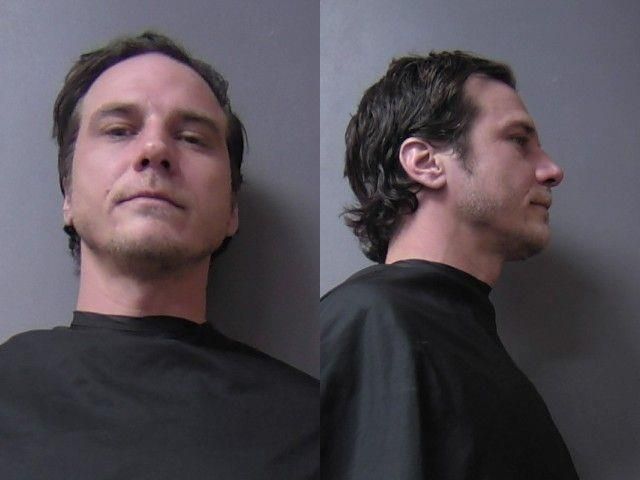
Joshua Davies' Petition for Post-Conviction Relief Denied
April 15, 2024

On May 3, 2000, while on electronic monitoring for violating his parole, 16-year-old Joshua Davies broke into his next-door-neighbor’s home by cutting a screen and opening a kitchen window. Davies then entered the bedroom of thirteen-year-old Jessica Lyons, hit her on the head with a hammer and attempted to rape her. Lindsay Haston, Jessica’s sister, rushed into the room to stop Davies and Davies hit her in the head with a hammer until she “blacked-out.” Jessica’s father, Rob Lyons, awoke and chased Davies out of the home. Jessica later died from multiple blunt force injuries to her head. 


On May 9, 2000, the State charged Joshua Davies with Criminal Confinement, a Class B felony; Rape, a Class A felony; Child Molesting, a Class A felony; Burglary Resulting in Bodily Injury, a Class A felony; Aggravated Battery, a Class B felony; Attempted Murder, a Class A felony; and Murder, a felony. Due to the charges and Davies’ age, the case was filed directly in adult court. On August 31, 2000, the State filed an amended information requesting a death sentence. 


On December 27, 2000, Davies signed a plea agreement. Under the terms of the agreement, he agreed to plead guilty to Burglary Resulting in Bodily Injury, a Class A felony; Aggravated Battery, a Class B felony, Murder, a felony, and Criminal Deviate Conduct, a Class A felony. The plea left the sentence open to the trial court ranging from a term of years to Life Without Parole. 


A bench trial was held on February 5-6, 2001, in front of Judge Dennis Carroll. Following the presentation of evidence, Judge Carroll found the aggravation outweighed the mitigation and sentenced Davies to an aggregate executed sentence of 108 years. Specifically, the Court sentenced Davies to 26 years for Criminal Deviate Conduct, a Class A felony, 62 years for Murder, a felony, and 20 years for Burglary Resulting in Bodily Injury, a Class A felony. Each of the sentences were ordered served consecutive to each other at the Indiana Department of Correction.


The sentence was affirmed on appeal on November 28, 2001 in Davies v. State, 758 N.E.2d 981 (Ind. Ct. App. 2001). 


On June 25, 2014, Davies filed a pro se Petition for Post-Conviction Relief. The Public Defender’s Office entered its appearance on behalf of Davies on July 24, 2014. On August 5, 2022, Davies’ post-conviction counsel filed an Amended Post-Conviction Petition alleging: (1) the plea was not entered into a knowing, intelligent and voluntary manner, (2) trial counsel was ineffective; (3) appellate counsel was ineffective; (4) Davies’ de facto life without parole sentence violates the federal and state constitutions; (5) there is newly discovered evidence based on advances in developmental psychology and neuroscience, and (6) Davies’ sentence is inappropriate due to significant changes in the legal landscape since imposition of his sentence.  On August 21, 2023, Davies filed an additional claim that Davies’ sentence violates the prohibition against Cruel and Unusual Punishment. 


An evidentiary hearing was held on the Petition for Post-Conviction Relief on September 8, 2023, where Davies and the State of Indiana presented evidence. Judge Angela Warner Sims, special judge, issued Findings of Fact and Conclusions of Law on April 12, 2024. Therein, Judge Sims denied all of Davies claims, concluding:


  1. Petitioner’s guilty plea was knowing and voluntary. Petitioner has failed to carry his burden and relief is DENIED.
  2. Petitioner has failed to carry his burden to prove ineffectiveness of trial or appellate counsel, and his claims for relief are DENIED.
  3. Petitioner’s claims pertaining to the appropriateness of his sentence are barred by the doctrine of res judicata. However, even if the court was permitted to consider them, for the reasons stated herein, the court cannot find that Petitioner’s sentence is inappropriate under current Indiana Appellate Rule 7(B).
  4. Petitioner’s sentence is not cruel and unusual punishment, not does his continued incarceration violate Ind. Const., Art. 1, s. 18. Petitioner’s claims for relief under those two constitutional provisions are DENIED.


Madison County Prosecutor's Office News
August 21, 2026
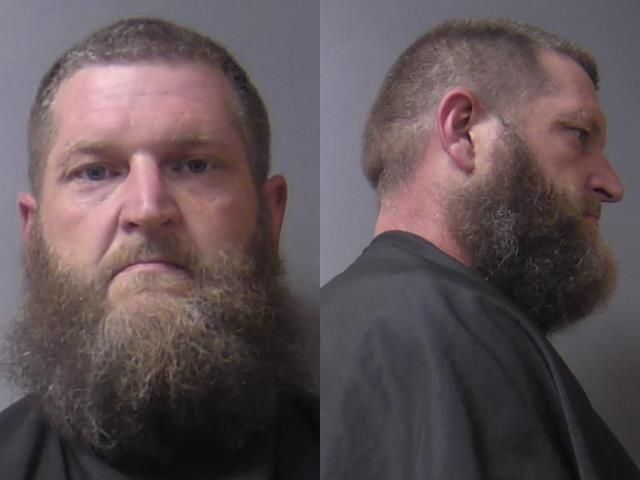
On Friday, August 21, 2026, a Madison County Circuit Court IV jury found Matthew Deprez (41 of Elwood) guilty of two counts of Child Molest as Level 4 felonies. Following the jury's verdict, Judge David Happe remanded Deprez into the custody of the Madison County Sheriff's Department and scheduled his sentencing for September 22, 2026, where he faces a possible sentence of 2-24 years. At trial, the State's case was presented by Deputy Prosecutors Grainne Kao and Tyler Piraino. The case was investigated by Det. Caitlin Morency of the Madison County Sheriff's Department.
August 10, 2026
On August 10, 2026, Judge Angela Warner Sims sentenced Sean Wheatley (29 of Greenfield) to sixteen (16) years with eight (8) years to be executed at the Indiana Department of Correction followed by eight (8) years of formal probation. In July, a Madison County Circuit Court 1 jury found Wheatley guilty of two counts of Child Molesting, as Level 4 felonies. Under Indiana law, a Level 4 felony carries a possible sentence of two (2) years to twelve (12) years.  The State's case was presented by Deputy Prosecutor Dan Kopp and Certified Legal Intern Aleyah McCorkle. The case was investigated by Lt. Sean Waterman of the Ingalls Police Department.
July 30, 2026
On July 30, 2026, Judge David Happe sentenced Rashawn Samuels (19 of Anderson) to an aggregate sentence of 125 years to be executed at the Indiana Department of Correction. In June 2026, Samuels was found guilty following a joint trial with co-defendant Jo'Majze Larry of the following offenses related to the February 2, 2025, shooting death of 26-year-old Dayla Swain outside Sonny Ray's in Anderson: Count I: Aiding, Inducing, or Causing Murder, a felony; Count II: Attempted Murder, a Level 1 felony; Count III: Conspiracy to Commit Murder, a Level 2 felony; and Count IV: Criminal Organization Activity, a Level 5 felony. Following the jury's verdict, Samuels admitted to the Criminal Organization Enhancement. At sentencing, Judge Happe imposed a sentence of 62.5 years for Murder enhanced by an additional 62.5 years for the Criminal Organization Enhancement for an aggregate sentence of 125 years to be executed at the Indiana Department of Correction. The State's case was presented by Deputy Prosecutors Tyler Piraino and Jesse Miller. The case was investigated by Det. Brett Webb and Det. Cora Garcia of the Anderson Police Department.
July 29, 2026
O n July 29, 2026, Judge David Happe sentenced Jo'Majze Larry (15 of Anderson) to an aggregate sentence of 100 years to be executed at the Indiana Department of Correction. In June 2026, Larry was found guilty following a joint trial with co-defendant Rashawn Samuels of the following offenses related to the February 2, 2025, shooting death of 26-year-old Dayla Swain outside Sonny Ray's in Anderson: Count I: Murder, a felony; Count II: Attempted Murder, a Level 1 felony; Count III: Conspiracy to Commit Murder, a Level 2 felony; Count IV: Criminal Organization Activity, a Level 5 felony; and Count V: Dangerous Possession of a Firearm, a Class A misdemeanor. Following the jury's verdict, Larry admitted to the Criminal Organization Enhancement. At sentencing, Judge Happe imposed a sentence of 50 years for Murder enhanced by an additional 50 years for the Criminal Organization Enhancement for an aggregate sentence of 100 years to be executed at the Indiana Department of Correction. Under Indiana law, the criminal organization enhancement is designed to address crimes committed by individuals acting as part of an organized criminal enterprise rather than as isolated offenders. Indiana law recognizes that criminal organizations can pose a greater threat to public safety because they coordinate criminal activity, recruit others to participate in crime, and often commit offenses for financial gain or to further the goals of the organization. To seek this enhancement, the State must prove beyond a reasonable doubt that the defendant knowingly or intentionally committed a qualifying offense while acting in association with a criminal organization. A "criminal organization" is generally defined as a group of three or more persons that has as one of its primary purposes the commission of one or more criminal offenses and whose members engage in a pattern of criminal activity. Because the defendant in this case was under the age of 18 at the time the murder was committed, Indiana law provides a unique opportunity to seek judicial review of the sentence after a significant period of incarceration. Under Indiana Code 35-38-1-17(n), an individual sentenced for murder committed while they were a juvenile may file an additional petition for sentence modification without the consent of the prosecuting attorney after serving at least 20 years of the sentence. The 20-year period is based on actual time served and does not include any credit time earned for good behavior or educational programs. It is important to note that this statute does not automatically reduce or shorten the defendant's sentence, nor does it guarantee release after 20 years. Rather, it simply permits the defendant to ask the sentencing court to consider modifying th e sentence. At any such hearing, the prosecutor's office has the opportunity to oppose the request, victims and their families have the right to be notified and heard, and the judge retains complete discretion to grant or deny the petition after considering all relevant facts and circumstances. Larry's co-defendant, Rashawn Samuels, is scheduled to be sentenced on July 30, 2026 where he faces a maximum possible sentence of 176 years. The State's case was presented by Deputy Prosecutors Tyler Piraino and Jesse Miller. The case was investigated by Det. Brett Webb and Det. Cora Garcia of the Anderson Police Department.
July 28, 2026
On July 28, 2026, Judge Angela Warner Sims sentenced Donavan Harris (20 of Anderson) to a total of 60 years for the 2023 Murder of 15-year-old Jullian Craig. Judge Sims ordered 50 years to be executed at the Indiana Department of Correction followed by 5 years suspended to formal probation and an additional 5 years suspended to informal probation. On June 3, 2026, a Madison County Circuit Court 1 jury found Harris guilty of: Count I: Murder, a felony; Count II: Attempted Armed Robbery, a Level 3 felony; and Count III: Criminal Confinement, a level 3 felony. All three counts merged for the purposes of sentencing. Harris' charges stem from the shooting death of 15-year-old Jullian D. Craig, who was killed during the commission of an attempted armed robbery on November 24, 2023. The evidence presented at trial proved that Craig was armed with a handgun lying in the backseat of a vehicle driven by Harris, when the pair lured a subject into the vehicle with the promise of paying a debt owed. During an altercation inside the vehicle, the victim of the attempted robbery shot and killed Craig in self-defense. Under the doctrine of "Felony Murder", when someone commits or attempts to commit certain serious felonies, such as robbery, and a death results during the commission of that crime, the participants can be held responsible for the death. The law recognizes that some crimes are so inherently dangerous that those who choose to commit them should be held accountable for the foreseeable consequences thereof, including the loss of human life. At trial, the State's case was presented by Deputy Prosecutors Jennifer Haley and Samanthan Green. The case was investigated by Officer Travis Thompson, formerly of the Anderson Police Department, now employed by the Pendleton Police Department. 
More Posts